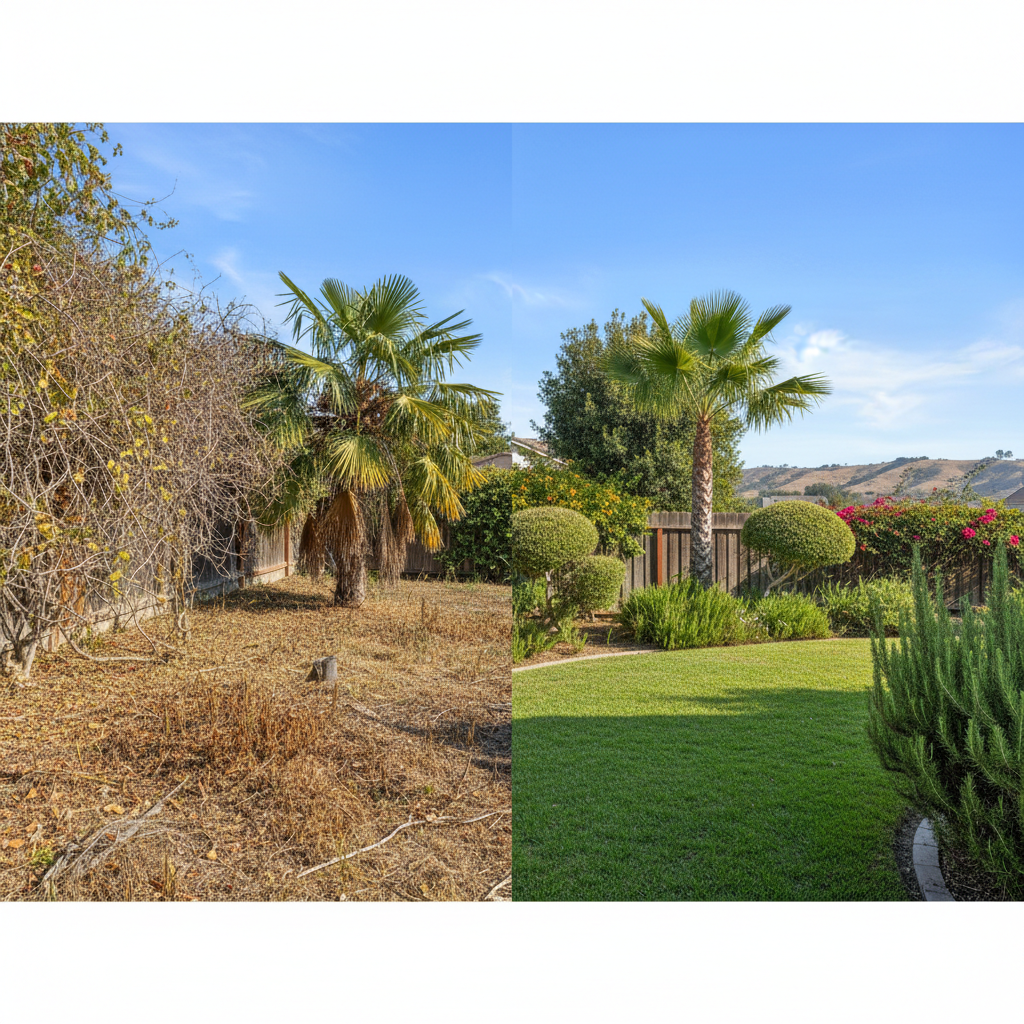
You're looking at your hedges and shrubs, wondering how to keep them tidy. Maybe they're getting a little wild, or you just want that clean, manicured look. For most folks in Newport Beach, there are two main ways to go about trimming: shearing or selective pruning. I see both all the time, and each has its place, but one is usually better for the long haul, especially with our unique coastal climate.
Shearing: The Quick & Uniform Approach
Shearing is what most people picture when they think about hedge trimming. It's that fast, uniform cut, usually done with power trimmers, that gives you a crisp, geometric shape. Think perfectly straight lines, neat boxes, or rounded domes. It's popular because it's quick, and it gives an immediate, dramatic change to the look of your landscape.
The Good:
- Speed: It's much faster than selective pruning, which can mean lower labor costs initially.
- Uniformity: If you want a formal, very structured look, shearing delivers. It's great for hedges that define property lines or create garden rooms.
- Instant Gratification: Your shrubs look perfectly neat right after the job's done.
The Not-So-Good:
- Surface Growth Only: Shearing primarily cuts the outer layer of leaves and branches. This encourages dense growth on the outside, but it can leave the interior of the shrub sparse and woody. Over time, this creates a 'shell' of foliage, making the plant less healthy and more susceptible to disease.
- Weakens the Plant: By constantly removing only the outer growth, you're not allowing sunlight to penetrate the inner parts of the plant. This can lead to weaker growth overall and a shorter lifespan for the shrub.
- Frequent Maintenance: Because you're only trimming the surface, new growth quickly pushes past that perfect line. You'll find yourself needing to shear more often to maintain that crisp look, sometimes every few weeks during peak growing season here in Southern California.
- Less Natural Appearance: While great for formal designs, it can look unnatural for many plant types and landscapes.
Selective Pruning: The Healthier, More Natural Way
Selective pruning, sometimes called hand pruning or structural pruning, is a more thoughtful, detailed approach. Instead of just buzzing the surface, we're looking at the individual branches, identifying dead, diseased, or crossing limbs, and making cuts back to a main branch or bud. It's about shaping the plant to its natural form, encouraging healthy growth, and improving air circulation and light penetration.
The Good:
- Plant Health: This is the biggest benefit. By removing unhealthy wood and encouraging inner growth, you're promoting a stronger, more resilient plant. This is especially important in our coastal environment where plants are exposed to salt air and sometimes strong winds.
- Natural Beauty: Selective pruning enhances the natural shape and flowering potential of the shrub. It looks more organic and less 'chopped'.
- Reduced Maintenance Frequency: While it takes longer initially, selective pruning often means you don't have to trim as often. The cuts are more strategic, guiding the plant's growth over a longer period.
- Improved Airflow & Light: Opening up the canopy helps prevent fungal diseases and allows light to reach all parts of the plant, leading to more vigorous growth and flowering.
- Better Durability: Healthier plants are more resistant to pests, diseases, and environmental stress.
The Not-So-Good:
- Time & Cost: It's more labor-intensive and requires a skilled hand, so it typically costs more upfront than a quick shear.
- Slower Results: You don't get that immediate, perfectly uniform look. The plant needs time to grow into its new, healthier shape.
- Requires Knowledge: You need to understand plant growth habits to do it effectively, which is why it's often best left to professionals like us at Apex Tree.
My Recommendation for Newport Beach Homeowners
For most shrubs and bushes in Newport Beach, especially those in our beautiful Corona del Mar neighborhoods that are often exposed to ocean breezes, I strongly recommend selective pruning. Yes, it costs a bit more initially, but it's an investment in the long-term health and beauty of your landscape. You'll have healthier, more robust plants that require less frequent trimming in the long run and look fantastic doing it.
Shearing definitely has its place for very formal hedges where a super crisp, geometric line is the absolute priority, but even then, I'd suggest incorporating some selective thinning from time to time to keep the interior healthy. For everything else, especially flowering shrubs or those you want to maintain a natural form, selective pruning is the way to go.
Think about it: you wouldn't just buzz-cut your hair every time without a thought for its health, right? Your plants deserve the same thoughtful attention. If you're unsure which approach is best for your specific plants, give us a call at Apex Tree. We can take a look and give you an honest assessment.