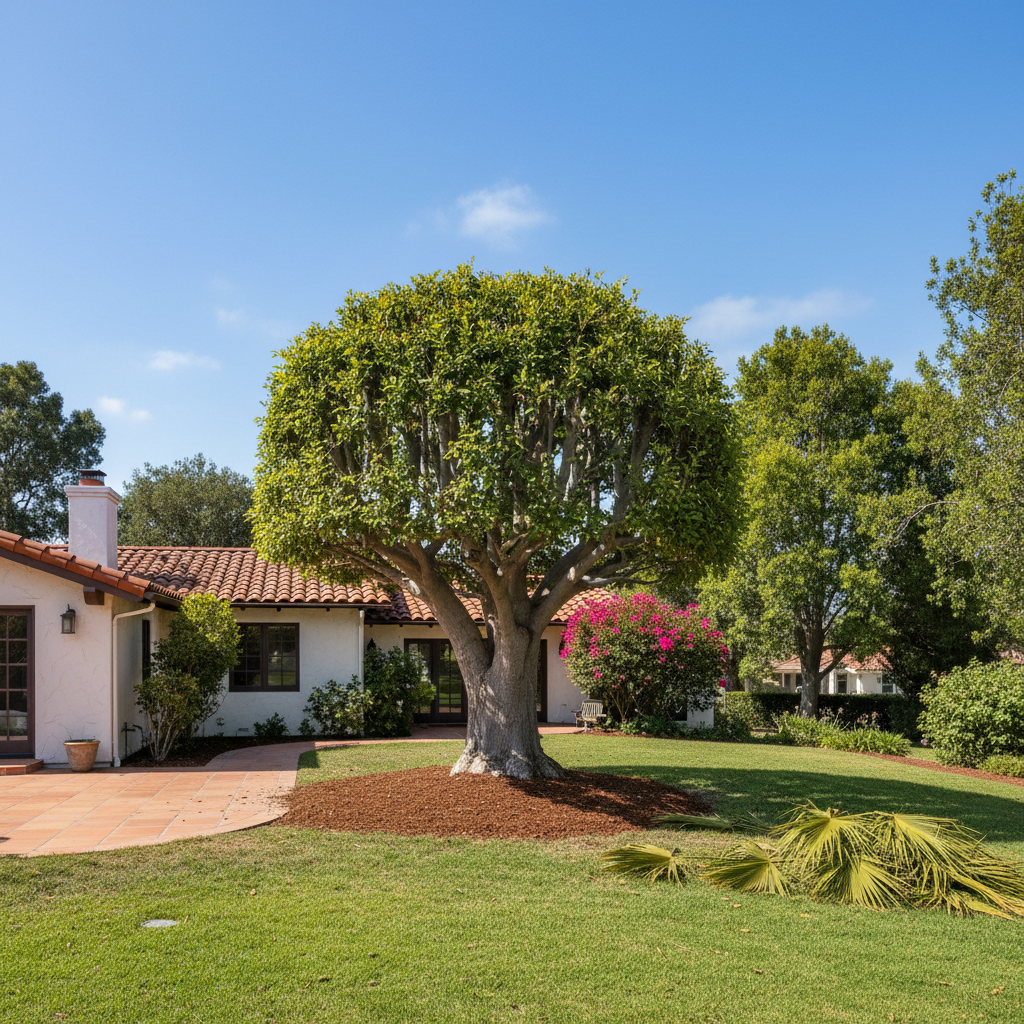
You have had your trees pruned. That is a big step for a healthier as well as a safer landscape here in Newport Beach. Pruning is not a one-and-done deal. Your trees need ongoing attention to keep them looking good as well as staying strong. This is especially true with our coastal winds as well as our salty air in Newport Beach.
Extending the Life of Your Pruning Work
Professional tree pruning sets your tree up for success. You need to follow through with some basic care to make that success last. Proper watering is very important. Our climate can get dry even though we are by the ocean. Stressed trees are more susceptible to disease as well as pests. Make sure your trees are getting enough water, especially during those long, hot stretches in Newport Beach. Deep, infrequent watering is usually better than shallow, frequent sprinkles. This encourages roots to grow deeper. This also makes the tree more reliable.
Mulching is another simple trick for your trees in Newport Beach. A good layer of organic mulch around the base of your tree helps. It should not be touching the trunk. This mulch helps retain soil moisture as well as regulate temperature as well as suppress weeds. It is like a protective blanket for the roots. This also helps keep the soil healthy. Healthy soil is important for nutrient uptake.
Your trees have clean cuts after a professional tree pruning. These cuts heal over time. Keeping them healthy means they can seal those wounds faster. This reduces the chance of disease getting in. Our team at Apex Tree always makes clean cuts. We recommend you keep an eye on them as they heal.
What Regular Maintenance Looks Like for Newport Trees
Regular maintenance is not about constant, heavy pruning. It is more about observation as well as light touch-ups. Apex Tree tells clients in areas like Corona del Mar that a quick walk-around their property once a month can save a lot of headaches later. This is what you should look for:
- Water sprouts and suckers: These are fast-growing, vertical shoots. They pop up from branches as well as the base of the trunk. They are usually weak. They do not contribute to the tree's structure as well as its health. You can often snap these off by hand when they are small. You can also snip them with hand pruners.
- Crossing or rubbing branches: Two branches can grow in a way that they rub against each other. They can create open wounds. These wounds are an invitation for pests as well as diseases. You can often remove the weaker branch or the less ideally placed branch with a small cut if you catch them early.
- Dead or broken twigs: You can remove small dead twigs any time. They are not helping the tree. They can also be a minor hazard.
The dormant season is the best time for more significant tree pruning for most trees in Southern California. This is typically late fall to early spring. The tree is resting as well as less stressed during this time. You can see the branch structure clearly without leaves. This makes it easier to identify what needs to go. Light maintenance tree pruning can be done in summer. This addresses overgrown branches as well as improves airflow.
Warning Signs of Problems
Your trees will often tell you when something is wrong. You need to know what to look for. Do not ignore these signals:
- Unusual leaf discoloration or wilting: Leaves turning yellow or brown outside of their normal seasonal cycle is a red flag. Wilting despite adequate watering is also a red flag. This could mean a nutrient deficiency as well as root issues. It could also mean a disease like Phytophthora root rot. This disease thrives in our wet winters as well as poorly drained soils in Newport Beach.
- Thinning canopy: A sparse canopy or premature leaf drop can show stress as well as disease.
- Cankers, oozing sap, or strange growths on the bark: Look for sunken areas on the trunk. Dark staining is also a sign. Any kind of foamy or bleeding sap can also be a problem. These are often signs of fungal infections as well as borers. For example, Sudden Oak Death causes bleeding cankers. This is a serious threat to our Coast Live Oaks in Newport Beach.
- Dead branches that are not just small twigs: Larger branches dying off is a sign of a deeper issue.
- Fungal growth at the base of the tree or on the trunk: Mushrooms or conks can show internal decay.
- Cracks or splits in the trunk or major limbs: These compromise the tree's structural integrity. They can also be very dangerous.
- Leaning: Some trees naturally lean. A sudden or increasing lean can mean root problems as well as instability.
- Soil mounding or cracking around the base: This indicates root movement as well as potential instability. This is especially true after heavy rains in Newport Beach.
When to Call a Professional
Knowing when to call an expert can prevent a small issue from becoming a major, costly problem. You should definitely pick up the phone in these situations:
- Large branch removal: You are dealing with anything bigger than a small limb. You can comfortably reach small limbs from the ground with hand pruners. Anything larger is a job for a professional tree service. Improper cuts can severely damage a tree. They can also create hazards.
- Signs of disease or pests: You spot any of the warning signs mentioned. This includes cankers as well as unusual wilting as well as significant dieback. Get an arborist out there. Early detection is important for diseases common in our area. This includes Sudden Oak Death as well as Phytophthora root rot.
- Structural concerns: Cracks as well as splits as well as a noticeable lean are serious safety hazards. Significant deadwood in the canopy is also a safety hazard. Do not wait for a Santa Ana wind event to bring a limb down on your house or car in Newport Beach.
- Trees near power lines or structures: Any tree pruning that puts you close to power lines is too risky for a DIY job. This also includes pruning near your roof as well as other buildings. The City of Newport Beach also has regulations about trimming trees in public rights-of-way. Be careful there.
- Annual inspections: Everything may look fine. A yearly check-up by a certified arborist can still catch subtle issues. This can happen before they get worse. They can also help you plan future tree pruning. This maintains the tree's health as well as structure for years to come.
Our team at Apex Tree is always happy to come out and give you an honest assessment. We know the specific challenges our Newport Beach trees face. This includes the salt spray near the Balboa Peninsula. It also includes the compacted soils in some of our older neighborhoods. Keeping your trees healthy means keeping your property safe as well as beautiful. That is what Apex Tree is all about in Newport Beach.